 info@naranjaspain.es
 +34 865 770 615
 Login or register


Quick answer: winters on the Alicante coast are mild. According to the AEMET normals for the Alicante station, from December to February the average daily maximum is around 17-18 °C and the average minimum 6-7 °C, with between 164 and 181 hours of sun a month. The problem is not the cold outside but that many homes are built for summer: little insulation, tiled floors and no central heating. It can be colder indoors than outdoors, and with average relative humidity of 66-68%, condensation and mould appear if you don't ventilate and heat. If you are buying, view the property in winter.
What the climate is like from October to March
These are the AEMET normals for the Alicante station (1981-2010 period). They are Alicante figures, not Torrevieja or Guardamar: the coastal climate is similar but can differ by a few degrees from one town to another. For your exact area, check AEMET.
| Month | Average maximum (°C) | Average minimum (°C) | Rainfall (mm) | Relative humidity (%) | Hours of sun |
|---|---|---|---|---|---|
| October | 24.9 | 14.5 | 47 | 70 | 217 |
| November | 20.5 | 10.3 | 36 | 69 | 173 |
| December | 17.7 | 7.4 | 25 | 68 | 164 |
| January | 17.0 | 6.3 | 23 | 67 | 181 |
| February | 17.6 | 7.1 | 22 | 66 | 180 |
| March | 19.6 | 8.9 | 23 | 65 | 227 |
In January, 181 hours of sun works out at about 5.8 hours a day. And the full year adds up to 2,851 hours of sun. There is plenty of sunshine, but the warmth that comes in during the day doesn't stay inside at night.
Why it is colder indoors than outside
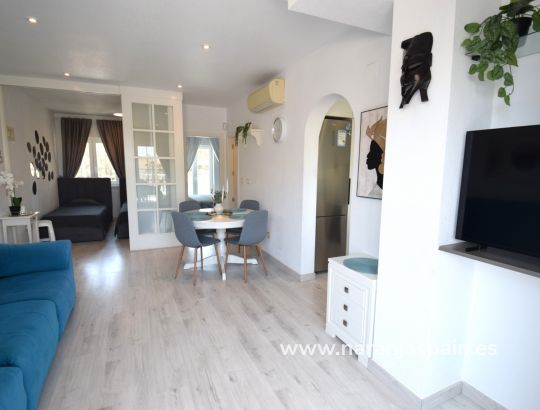
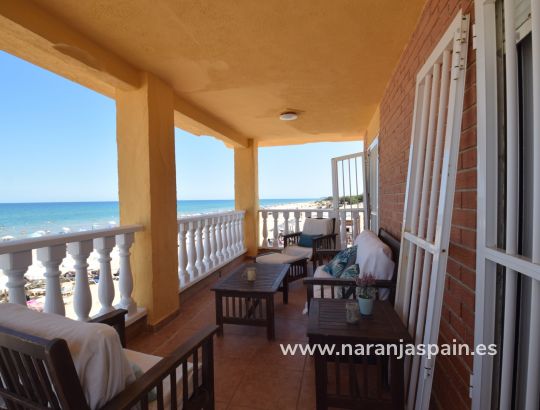
Many coastal homes are designed to shed heat, not keep it: large windows, cross-ventilation, tile or marble floors, thin walls with little insulation and an orientation chosen for summer. If you are used to a home with central heating and tight windows, expect the opposite. Without central heating, the house cools down with nights averaging 6-7 °C and takes a while to recover. A south-facing terrace can be pleasant in the sun while the living room, in the shade, stays cold.
Two things make it feel worse:
- Ground-floor and north-facing homes get little direct sun in winter.
- Homes that have been shut up for weeks build up the cold in their walls and floors.
Damp and mould: condensation, leaks or rising damp
Not all damp is the same, and each type gets fixed differently.
| Type | How to recognise it | What to do |
|---|---|---|
| Condensation | Black patches in corners, bathroom ceilings, behind wardrobes and on cold windows. Appears in weeks without ventilation or heating | Ventilate, heat moderately and steadily, use a dehumidifier |
| Leak | Patches with defined edges that appear or grow after rain, mostly on top floors, under terraces or on façades | Check the waterproofing of the roof, terrace and façade. A job for a professional |
| Rising damp | Damp that climbs the walls from the floor on the ground floor, with whitish salts | Professional diagnosis. Best spotted before you buy |
With average relative humidity of 66-68% in winter, the outside air is already humid. Indoors, if you don't ventilate, it rises further.
What usually works against condensation:
- Ventilate for a few minutes every day, preferably in the middle of the day, with windows open on opposite sides.
- Use the cooker hood when cooking and the bathroom extractor after a shower.
- Don't dry laundry indoors without ventilating.
- Move furniture a few centimetres away from cold walls.
- Run an electric dehumidifier in the rooms that suffer most.
- Keep a moderate, constant temperature instead of heating in bursts.
Heating: what there is and what to look at
- Air conditioning with a heat pump. The most common option in the area, and many homes already have it. Check that the unit has a heating mode and that the filters are clean.
- Electric radiators and convector heaters. Cheap to buy, expensive to run if you heat for long periods.
- Aerothermal heating and underfloor heating. Some new-build developments include them. Ask which system each home has.
- Pellet or wood stoves. Only if the community statutes and the installation allow it.
- Butane stoves. They add moisture and need ventilation. Avoid them in closed rooms.
Running costs depend on your tariff and contracted power, so there is no single figure for everyone. Before buying, ask the owner for the electricity bills from December to February: it is the most honest data you will find.
Ask for the energy performance certificate too, which is compulsory to sell a home. The letter, from A to G, tells you how the building performs.
If you don't live here in winter
A home left empty for months suffers more. Before you leave:
- Have someone you trust go in from time to time, open the windows for a few minutes and check the property, especially after heavy rain.
- Empty the fridge and leave wardrobe doors and the fridge door open.
- Turn off the water at the stopcock if you will be away for long periods.
- Check that your home insurance is in force and what it covers.
Autumn rain: what the data says
At the Alicante station, September (56 mm), October (47 mm) and November (36 mm) add up to 139 mm, almost half of the year's 311 mm. And that rain tends to fall on just a few days. Torrevieja is inside AEMET's "Litoral sur de Alicante" warning zone, which issues warnings for heavy rain.
The Vega Baja comarca, where Torrevieja, Guardamar and Pilar de la Horadada are located, suffered serious flooding in September 2019. That doesn't mean every street is at risk: risk changes from one plot to the next. Before you buy:
- Check the official flood-risk mapping: the PATRICOVA of the Generalitat Valenciana and the National Flood Zone Mapping System (SNCZI) of the Ministry for the Ecological Transition.
- Don't rely on maps alone. A University of Alicante study of the 2019 rains identified areas that flooded and did not appear on the official maps. Ask the community, the neighbours and the administrator whether the property has ever flooded.
- Look closely at garages, basements and ground floors.
- Check your insurance. Home policies usually include the surcharge payable to the Consorcio de Compensación de Seguros, which covers damage from extraordinary risks such as floods. Confirm with your insurer exactly what your policy covers.
How to buy knowing all this: a checklist for winter viewings
- View the property between November and February, and if you can, after a rainy day.
- Look at corners, ceilings, behind wardrobes and window frames, and smell the air: a stale or damp smell doesn't lie.
- Check the orientation and how many hours of direct sun the living room gets in winter.
- Inspect windows and frames. Worn seals and single glazing let the cold in.
- Ask for the electricity bills from December to February.
- Ask what heating or cooling system there is and what condition it is in.
- Examine the terrace and roof and ask about past or planned community levies for waterproofing or façade work.
- Ask for the energy performance certificate.
- Check the flood-risk mapping for the plot.
- Request the nota simple and have an independent lawyer review the documents.
Want to see what is available? Browse properties in Torrevieja and properties in Guardamar del Segura, or get in touch. If you want the breakdown of the costs of the purchase, it's in our guide to the true cost of buying property in Spain.
Frequently asked questions
Is it cold in winter on the Costa Blanca?
Outside, not very: at the Alicante station, average maximums from December to February are 17-18 °C and minimums 6-7 °C. Indoors, without heating, it can be colder than the street.
Do I need heating?
To live here in winter, most homes need some way of heating. The most common is air conditioning with a heat pump.
Why do I have mould if there are no leaks?
The most common cause is condensation: water vapour from the home condenses on cold surfaces when there isn't enough ventilation or heat. If the patches have defined edges and grow after rain, it may be a leak.
When does it rain most?
At the Alicante station, from September to November falls almost half of the annual rainfall (139 of 311 mm), and it tends to be concentrated on a few days.
How many hours of sun are there in January?
At the Alicante station, 181 hours on average, about 5.8 a day.
Is winter a good time to view properties?
Yes. In winter you see how the home really behaves: cold, damp, orientation and the state of terraces and roofs.
Source of the climate data
AEMET: climate normals for Alicante, station 8025, period 1981-2010
This article is for information only and is not technical or legal advice. For any purchase decision, consult a lawyer and, where appropriate, a technician to inspect the property.







 API: 764

 info@naranjaspain.es
 +34 865 770 615